Categories
Appetizer Healthy foods Indian Maharashtrian Side dish Snack Vegan Vegetarian

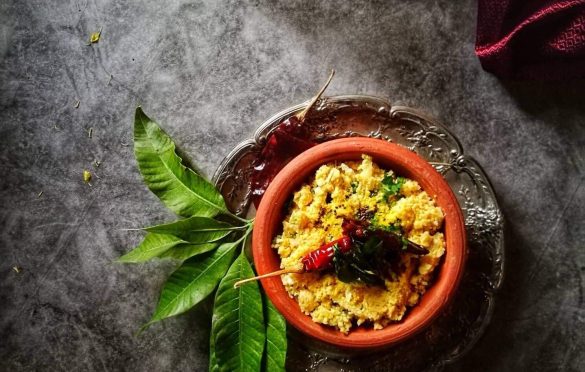
Kairchi Daal

Gudhi padwa is celebrated in Maharashtra, India as a new year. Across India the same day is celebrated by different names but the spirit is the same. We look at nature, and you can see that spring is in the air and this day is the celebration of the new beginnings. Bengali celebrate ‘poila boishokh’ , Keralite celebrate Vishu and so much more.  Not just in India but even Zoroastrians celebrate ‘Nowrouz’ which marks the first day of the spring. On this day they have a platter newly sprouting wheat is always on the table along with other things. 

I feel you feel like celebrating if you just look around. Where I live, there are beautiful blossoms everywhere, when I go for a walk, I see beautiful wildflowers, mustard fields with yellow flower and just a sense of rejuvenation. 

We went for a beautiful hike in a state park and saw so many beautiful wild flowers, it was just breathtaking. 

I picked a few of these and decided to make a Gudhi using those. 

In India, especially in Maharashtra we celebrate Navratri which starts on Gudhi Padwa. Often there are Haldi Kunku which is a gathering for women, an informal social gathering. The celebration is for a goddess and I remember very fondly my Aai coming up with amazing ideas for decorations. One year we had recreated a famous garden from southern india, another year was a beautiful swing made with flowers and plants. As a kid I loved helping Aai with this event.

This is also the season when you start seeing Green mangoes on the tree in India. So naturally traditionally two dishes using the green mango are always made for this haldi kunku, Aam Panhe, a drink made with cooked green mango & jaggery and the second is this , Kairichi Daal.

I love both of these things very much. Today when I picked up the green mango to make this, it turned out not very sour but the kiwis I picked up from the farmers market were so sour, so voila, a new dish is born. I added some Kiwi and the results were quite delicious.

It a super easy recipe, hope you guys like it. If you have any such traditions, I would love to know about them. 🙂

I have also written the recipe in Marathi, hope thats useful to some.

Kiwi Green Mango Lentil Salad

This is a typical dish made during the spring while the mangoes are still green and tart. Soaked lentils add a perfect crunch to this salad

Ingredients

साहित्य

  • 2 Cups Chana Daal
  • 1/2 Cup Peeled and grated Green Mango
  • 2 Kiwi Peeled and chopped
  • 3-4 Green Chili paste
  • 1 Tsp Salt
  • 1 Tbsp Sugar
  • 1/3 Cup Freshly grated coconut
  • 1-2 Tbsp Chopped mint leaves
  • 1 Tbsp Chopped cilantro

For tempering

  • 3 Tbsp Oil
  • 1 Tsp Mustard seeds
  • 1 Tsp Cumin seeds
  • 1/4 Tsp Asafetida
  • 3 Dry red chilies
  • 1 Sprig Curry leaves

Instructions

Method

  1. Soak the lentils for 4-5 hours at the least 

  2. Drain and crush them in mortar pestle, make sure you don’t make a fine paste

  3. Mix sugar, salt, coconut, mint, cilantro in the crushed lentils. Once its completely mixed, add the kiwi and green mango. 

  4. Heat oil in a pan. Check if its hot by adding a couple of mustard seeds, if they splutter add the rest of the ingredients and saute for 30 secs. Make sure it does not burn 

  5. Add this tempering to the lentil mixture. The salad is now ready 

  6. Serve at room temperature

Categories
bread Indian Maharashtrian Snack Vegetarian

Mumbai Pav

The first thing I do when I land in Mumbai the first thing I do is have a cup of cutting chai, you know I am super crazy about Chai, I probably have 4-5 cups everyday.

The second thing I do is have Vada Pav. I have fond memories of traveling in the train and eating Vada Pav, served with spicy sautéd green chili and garlic chutney. I have a recipe for Vada Pav

Vada Pav is a popular street food in Mumbai, in fact Mumbai has amazing street food in general. Pav Bhaji, Pani Poori, Vada Pav, Tawa pulav, Ragda Pattice, Kutchi Dabeli, the list just goes on and on. When you talk about food like Kutchi Dabeli, Vada Pav, Pav Bhaji, you quickly realize that Paav/Bread is a critical element for these.

Kutchi Dabeli

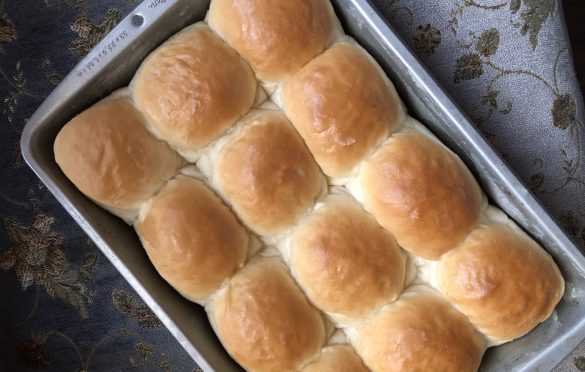
In Mumbai this bread is called Laadi Paav. Laadi is the tiled floor, when you see the sheets of this bread, you understand why it gets that name.

The bread came to India with the Portuguese, as I was reading more about this it seems like this Laadi Paav is similar to the Portuguese bread, Papo Secos. When I visited my sister in Miami, I tasted a Cuban bread, Pan De Agua and it was very smilar to the Ladi Paav.

My family is crazy about Pav Bhaji and Kutchi Dabeli, I end up making these at least twice a month if not more. In California I tried using Burger buns, dinner rolls, Kaiser rolls, but nothing tasted like the Paav I was used to eating growing up in India. So I talked to many people, read books, watched videos and came up with a recipe that works perfect for my family, I feel it comes closest to the Paav I have eaten.

Paav is made with simple ingredients like Yeast, Flour, Sugar and water. When I talked to some of the bakeries, I was told that its a poor man’s food so no fancy ingredients like Milk Powder or milk are used.

The trick is in the process and I feel that these three things are important:

  • High hydration dough- The dough should be quite lose, this allows the yeast to create large air pocket while baking.
  • Gluten formation- The dough needs to be kneaded so that strong gluten forms which can stand up to those air pockets while baking.
  • High temperature baking- Baking at high temperature for a shorter time is critical to get that crust.

I feel bread making is just as much an art as science, do even though I have given the exact recipe, I have also made a video which shows all the steps in detail.

Once you master this, you will be able to make them at home with the ingredients of your choice, I use unbleached organic flour and organic butter.

Ladi Pav

Pav Bhaji, Batata vada or kutchi dabeli, these all dishes are incomplete without a perfect Paav. This easy to make recipe will remind you of the Ladi pav from Mumbai.

Course bread, Snack
Cuisine Indian, Maharashtrian
Keyword Ladi Pav, Paav, pav, pavbhaji, vadapav
Prep Time 20 minutes
Cook Time 10 minutes
2 45 minutes
Total Time 30 minutes
Servings 6

Ingredients

  • 190 gms Water About 3/4 and a little more
  • 7 Gms Instant Yeast About 2 1/4 Tsp or 1 packet
  • 2 Tbsp Sugar
  • 250 gms All Purpose Flour
  • 3 Tbsp Unsalted Butter melted
  • 1 Tsp Salt

Instructions

  1. Heat the water to 100F. I use a thermometer to check because this is critical for the yeast to rise.

  2. Add sugar and yeast and set aside for 5 mins

  3. Add melted butter to the flour and mix. Add salt and mix it a little more. 

  4. By now the Yeast mixture should be frothy, this shows that the yeast is active

  5. Add the yeast mixture to the flour and mix until it comes together. 

  6. Now take the mixture on the counter and knead for good 10 mins. Don’t be alarmed if the mixture is wet, as you knead you will see that it comes together. 

    Dont be tempted to add more flour. Lose dough is key to a fluffy and soft bread

  7. Put the dough in a greased bowl, cover and let it rise for about 50- 60 mins. The dough should double, so if the temperature is cold, let it rest for 60 mins

  8. After 60 min, take the dough on the counter, deflate and knead for 3-4 mins

  9. Divide in 12 equal pieces. I use a scale. Equal balls ensure that the bread is of same size and also cooks uniformly

  10. Grease and dust with flour a 9×13 pan. I use the Wilton Brownie pan. 

  11. Roll the dough pieces in a tight ball and arrange in the pan. Make sure when you roll, you are making the surface taught, and also the seam side should be down. This ensure that when the dough rises, all air gets nicely trapped, making for a spongy bread

  12. Let the balls rest anywhere from 60-75 min. They should be visibly plump

  13. Heat the oven to 450 F

  14. Bake the bread for 8-10 mins. After 10 mins even if the crust does not look super dark brown, dont be tempted to bake longer

  15. Take the pan out and immediately brush with a little butter

  16. Cool on the baking rack. 

  17. Enjoy the Paav is ready

Recipe Video

Categories
dessert Indian Maharashtrian Main Dish Rice Vegetarian

Narali Bhaat

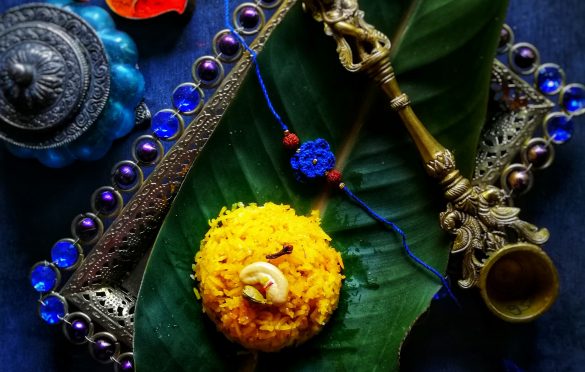
Narali Bhaat

If you notice coconut is used extensively in Maharashtrian cooking, especially in the costal  cooking. Same three ingredients, fresh coconut, Jaggery and rice are used to create a variety of desserts.

Modak

You take the rice flour, fresh coconut and jaggery, with a little bit of steam you turn it into this delicious dumpling, Modak. Modak are made specially for Ganesh festival as those are Bappa’s favorite.

Patole

You take the rice flour, make pancake with it. Stuff it with a earthy mixture of fresh Coconut, jaggery and some aromatic spices like cardamom and poppy seeds, That turns into patole. The same are also found in Kerala

Sandane

Soak the rice, grind it coarsely, makes some jaggery and coconut, steamed the whole make sure to make something like a pudding which can be enjoyed with sweetened coconut milk, it’s called Sandane. Sometime you can also add jackfruit pulp, I love that variation a lot

Ghavan Ghatale

A pancake is made with rice flour and eaten with coconut milk sweetened with jaggery

As you can see that traditional recipes use ingredients that are local, which is why I love cooking these recipes and sharing with everyone.

Today’s recipe is no different, it uses these very simple basic ingredients and turns into this comforting delicious dessert.

Rakshabandhan/ Narali Poornima

The fisherman community does not fish during the monsoon months. They treat the sea as their God and let it rest for those four months. Its on this day that they restart the fishing. They sing songs, dress up and offer coconut as an offering to the sea.

On this full moon the fisherman community celebrates with praying to the ocean God and offer him a special treat of this rice. Since the rice is heavily flavored with coconut, it’s called Narali bhat and the full moon is called Narali(naral=coconut) Poornima( poornima=full moon 🌝)

Narali Purnima

This is also the day when most of the Indians celebrate ‘Rakhi Poornima’. The word is based on the word, ‘ Raksha’, which means protection. It is believed that the sister ties this colorful thread, Rakhi on her brothers wrist as a thank you for protecting her. The brother makes a promise to take care of her.

Now a days it’s a celebration of sibling’s love and I absolutely adore that. We are three sisters and the youngest brother, and on this day we remind each other of the love we share and promise to be there for each other.

This year we could not be together for celebrating this festival but I at least tried to celebrate with this special bhaat and shared it virtually with them.

Here is the recipe!

Narali Bhaat

A sweet rice dish with coconut and jaggery, flavored with saffron.
Course Dessert, Main Course
Cuisine Indian, Maharashtrian
Keyword easy to make, gluten-free, vegetarian
Author Anagha

Ingredients

Ingredients

  • 1 cup Basmati Rice
  • 2 cups water
  • 1 pinch of salt
  • 4 Cloves
  • 4 Green Cardamom
  • 4 tbsp Clarified Butter/ Ghee
  • 8-10 Cashew split in halves
  • 1 Tbsp Saffron dissolved in 1 tbsp milk
  • 1 cup Freshly grated coconut
  • 3/4- 1 cup Jaggery

Instructions

  1. Soak the rice for 15-20 mins in cold water. Drain and set aside

  2. Heat 2 tbsp ghee in a heavy bottom pan

  3. Fry the cashews and set aside

  4. Add cloves and cardamom and saute for a min

  5. Add drained rice and saute for another min

  6. Add the boiling water to the rice and stir

  7. Add a pinch of salt, bring it to a boil and cover

  8. Let the rice cook till all the water is absorbed.

  9. Once the rice is cooked, spread it on a plate to cool

  10. Mix coconut and jaggery and cook till the jaggery melts and the mixture comes together

  11. Add the cooked rice and mix with very gently

  12. Cover and let it steam for 5-7 mins

  13. Add the remaining ghee and saffron milk and mix well

  14. Add the fried cashews and serve

Categories
Breakfast Indian Maharashtrian Snack Vegetarian

Dahi Sabudana- tapioca pearls with spiced yogurt

Spring/summer  is here. The rain gods have been kind and hence all the mountains around where I live are still green.  Near my home there is a barn and they bring out their sheep for grazing at this time, with the rolling hills, and the sheep,  it feels like Swiss countryside.
In India, we celebrate Holi. During holi a effigy of a demoness is burnt in fire. This demoness symbolizes all the mean thoughts, all the resentments that one might be carrying, you burn it all in the fire of Holi.  This is the time when we celebrate New Year according to the lunar calendar. Interestingly around the same time Parsi’s and Iranis’s also celebrate Navrouz, which translates to ‘New Day’. In short its all about starting afresh, leaving all the baggages that you might be carrying and focus on the future.

In India we have Navratri ( which translates to ‘9 nights’) twice a year. Interestingly they both fall when the season changes from hot to cold and cold to hot. One is in spring time and one in fall. During this time you fast, you don’t eat meat, regular vegetables, no cereals. I think it is very much needed, it gets your body time to adjust and also get ready for the new season. Its like a cleanse, where you eat light foods, people also try not to eat garlic & onion.


Each region in India has its own rules of what to eat and what not to eat during these nine months, some eat spinach, some eat tomatoes, others don’t. A few things like tapioca, water chestnut, sweet potatoes, cucumber are eaten across the country.

I come from Maharashtra where Sabudana Khichadi is very popular. I recently did an Insta story on it. Whenever I ask my kids what they want special for breakfast, the answer is Sabudana Khichadi . My husband can eat bowls of it. I normally end up making enough so I have leftovers as he likes to eat it the next day again.

Everyone knows Sabudana Khicadi but might not know this recipe. My mom makes it so well, my sister can eat bowls of it for days and not get tired. I like it more than Khichadi because it feels kind of cooling and I love yogurt 🙂

Dahi Sabudana

Ingredients:

  • 2 cups tapioca pearls ( you can get them in any indian grocery store)
  • 3-4 green chilies ( I use the thai chilies that are super spicy)
  • 1 1/2 tsp Cumin seeds
  • 1/3 cup roasted peanut powder
  • 1 cup buttermilk (if you can not get buttermilk, you can churn 1/2 yogurt with 3/4 cup water)
  • 1 cup
  • salt to taste
  • 1 tbsp sugar
  • 2 tbsp chopped cilantro

Method

  • Dry roast sabudana/tapioca
  • After it is cooled down, soak in some water for about 30 mins
  • Pound the cumin seeds and chilies to make a coarse paste. I prefer using mortar pestle but you can also use a chopper
  • After 30 mins, drain all the water and soak in buttermilk for at least 4-5 hours.
  • Now add yogurt ( preferably whole milk), roasted peanut powder, chili-cumin mixture and salt n sugar to taste.
  • Garnish with cilantro

Note:

  • You can also cook the sabudana in water until it is translucent ( instead of roasting and soaking in buttermilk).
  • Mix it with yogurt, roasted peanut powder, salt, sugar and the chili cumin mixture. You can also  add tadka of ghee jeera mirchi if desired
  • Garnish with cilantro
en_USEnglish