Kolhapuri chicken rassa- a fiery treat that you can not stop eating.
I like to eat it with Jowar Bhakri, raw onion and raw methi & white butter ( makhhan). Recipe:
2 chicken breast- chopped
1/2 tbsp ginger-garlic paste
1/4 tsp lime juice
4 tbsp Kolhapuri masala
2 tbsp Bedgi chili powder.
Oil
1 medium onion chopped
Method
Mix ginger garlic paste, salt and lime juice with chicken and keep aside for at least an hour.
Take oil in the pan. Saute finely chopped onions till they are brown.
Add the red chili powder. Add the marinated chicken and cook for 30 sec. Add the masala paste and saute more. Add salt to taste.
Add hot water to get the consistency you desire. Cover and cook for a few mins.
This actually works better with the mutton but since my husband prefers chicken, I make it more often
I try to eat and cook only what is in season, so I only shop at the farmers market for my fruits and vegetables. You will always find some kind of squash in season. Most of the summer and almost through the fall season, you will get opo squash in the market. It is easy to clean and very nutritious, so I try to include that in our diet as I can, be it in the form of a salad, curry, Soup, Parantha( Indian flat bread) or even dessert. Although it is very good for you, it can be very bland testing and needs some dressing up.
Typically you will find Lauki made with some sort of lentil, or in a form of a kofta. This recipe is none of that, it is very simple and easy to make. I also like the fact that it does not have onion or garlic and hence can be a nice addition to a dinner plate with other curries with onion, garlic.
For last night’s dinner I made egg curry which had onion and garlic, so I made the lauki majedar to compliment it.
I love authentic, traditional recipes. Agreed that sometimes they can be very involved and time consuming but I feel the taste after all that effort is unbelievable. Some of the old methods of cooking or prep work may look tedious, but those also have a great way of bringing people together. Imagine making raviolis together, or making papad in summer, or making pickles together, when you are working together teh work does not seem boring. So i love collecting recipes that are authentic, passed down from generation to generation, this is my way of preserving my culture and heritage, hoping to pass it to the future generation.
Today’s recipe is something I learnt from my friend Usha, who had leant it from her Ammamma( grandma).
Tamarind rice is very popular in Andhra Pradesh as well as Tamilnadu. This version I feel has both Andhra and Tamil influence on it. It is a typical brahmin recipe, and is used as Naivadyam on many auspicious ceremonies. I had eaten this the very first time in the famous Tirupati temple, so anytime I make it invokes the same feelings.
Although the recipe may look complicated it is not, it is complex. I will try to simplify the instructions as much as possible.
Tamarind Rice
There are four steps to the recipe.
Step 1:
Make a tamarind chutney – This chutney is pretty much jam like consistency.
Part A ( tempering 1)
2 tbsp oil
2 tsp mustard seeds
6 red chilies
Few curry leaves
Part B (Wet ingredients)
1 handful dry tamarind, cleaned and soaked in 2 cups of hot water
1/2 tsp turmeric powder
2 tbsp jaggery ( gud), you can substitute dark brown sugar as well.
Extract the tamarind pulp and discard any seeds or hard shells. Mix jaggery and turmeric in it.
Wet ingredients & Tempering 1 (Part A & B)
Part C ( Dry powder)
1/2 cup coriander seeds
6 dry red chilies ( or more if you like it spicy)
1 tsp black pepper
1 tsp cumin(jeera) seeds
1 tsp fenugreek( methi) seeds
1/2 tsp mustard seeds
1 tbsp chana daal
1 tbsp urid daal ( skinless)
Few curry leaves
1/2 tsp asafoetida( hing)
Dry Masala Powder ( Part C)
Dry roast the these and grind it in a coffee grinder( or a blender) to make a fine powder. Make sure you add fenugreek seeds and hing towards the end else it will burn and give bitter taste
To make chutney:
Heat the oil for tempering, add the red chilies until they are nicely browned. Add the remaining things and saute till the mustard seeds splutter( Part A). Now add the tamarind-jaggery mixture( Part B). Cook this on a low flame until you get a nice jam like consistency. Add the dry masala powder ( Part C) and mix well. Keep it aside.
Step 2:
1 .5 cups of rice
1 tsp oil
1/2 tsp turmeric
Cook rice with salt and set aside to cool. Once cooled add a tsp oil and turmeric and mix well.
Step 3: Make tempering 2
Ingredients:
1 tbsp oil
1 handful ( or two) peanuts
1 tsp mustard seeds
1 tbsp urid daal
1 tbsp chana daal
1/2 tsp asafoetida
A few curry leaves
Roast/fry the peanut in oil on a low-medium heat. Add mustard seeds, urid and chana daal and saute well. Now add curry leaves.
Step 4:Mix it together
Mix the cooked rice with a few tbsp of the prepared Tamarind chutney. Typically 4-5 tbsp chutney is enough for 1 cup raw rice cooked.
Add Tempering 2. Mix well.
Garnish with chopped cilantro if desired.
You are done. Enjoy the authentic Pulliodarai
Notes:
This tamarind chutney lasts a while even outside and if you refrigerate it, it can last upto a couple of months.
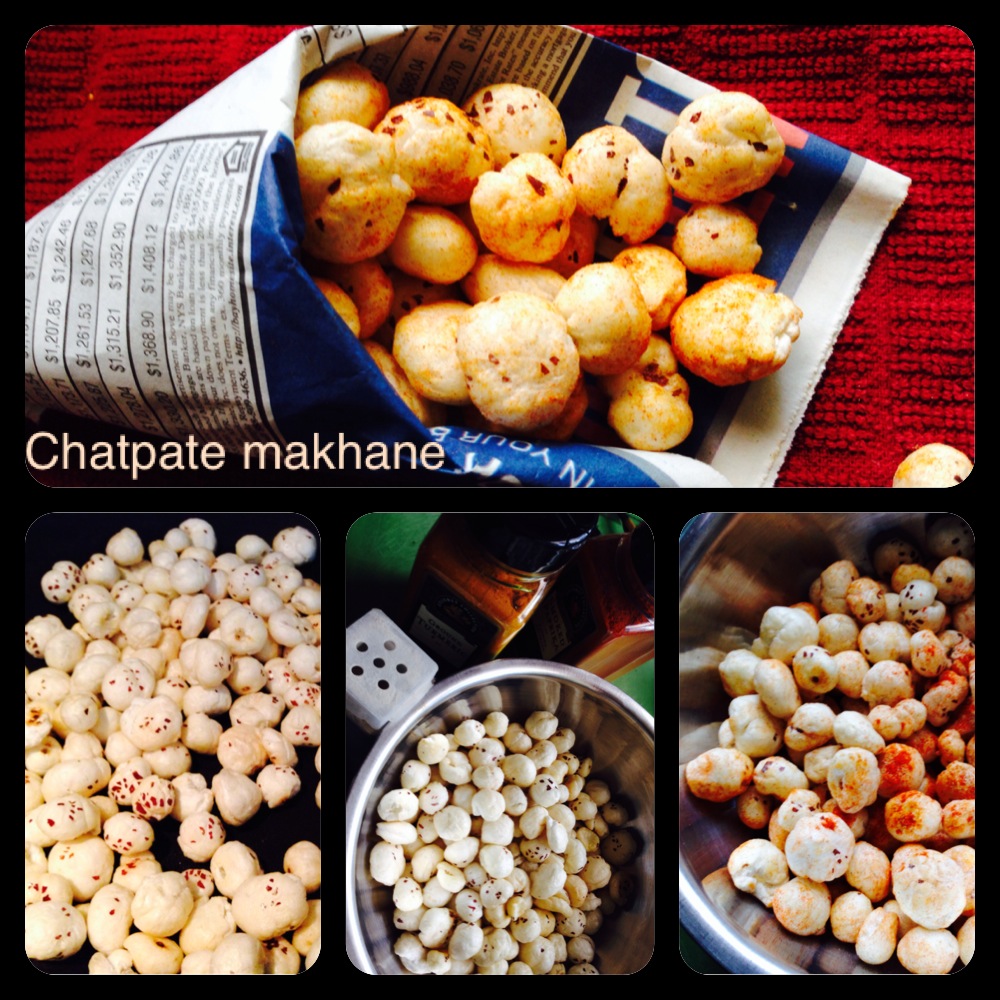
Making healthy and nutritional snacks without compromising the taste is always challenging to me. This recipe fits the bill very well.
Makhane are popped ‘lotus seeds’, considered to have many medicinal properries as per the ancient Chinese medicine science. It is loaded with potassium, calcium and iron, it is a great alternative for popcorn.
The aroma of the tiny yet divine ghee or coconut oil in this recipe is very tempting and smoked paprika for sure adds a nice flavor.
Spiced lotus seeds
It is a very simple recipe, slowly dry roasting is the key to get a lot of crunch without a lot of fat
Spices-
1/2 tsp Smoked paprika
1/4 tsp Turmeric (leave it out if making for Vrat)
3/4 tsp Chaat masala( it is a mixture of rock salt, cumin powder, pink salt & some black pepper..all ground to a fine powder)
1/4 tsp Black pepper powder
1/4 tsp Amchoor( dried mango powder)
Dry roast the makhane on low flame till they start getting crisp. Add the ghee( or coconut oil) and coat the makhane well. Add all the spices and toss well.
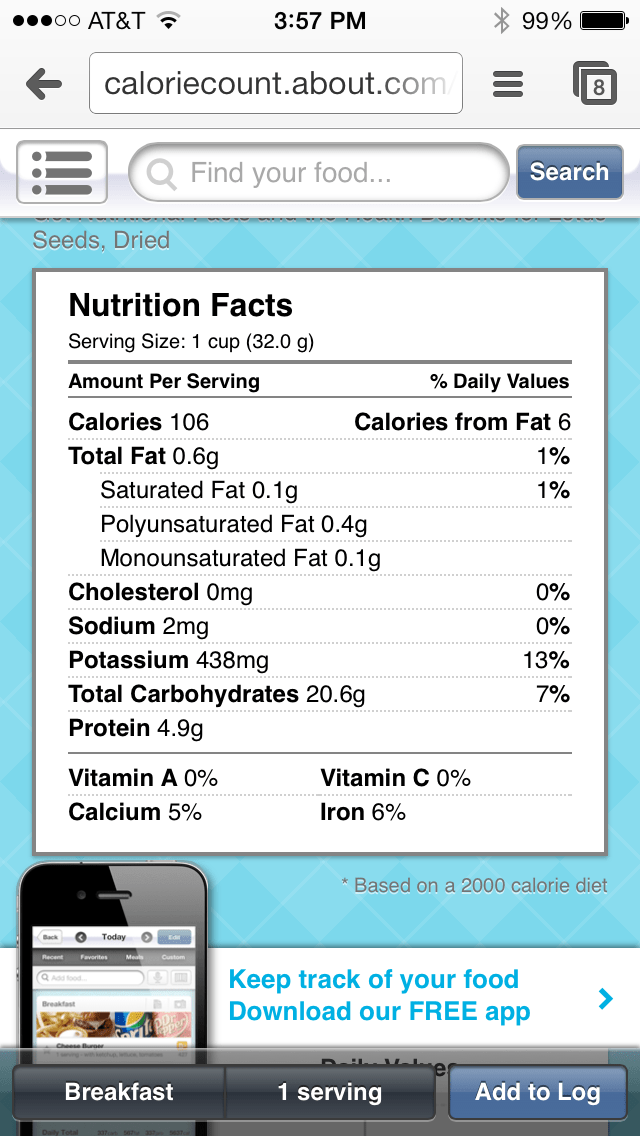
For those who are curious, here is the nutritional information for the dry puffed lotus seeds.
I come from Maharashtra, a state in Western India. It shares its border with other states like Karnataka, Andhra Pradesh, Madhya Pradesh, Chattisgarh, and Gujarat. Needless to say, you can see the influence of different states on the local cuisine in the cities on the border. Kolhapur, a town which is closer to Karnataka, is famous for four things: Goddess Mahalakshmi Temple, handmade leather shoes, beautiful Maharashtrian jewelry and its fiery cuisine.
Today, I am sharing a recipe for making a masala (a mixture of spices) that is used to make famous Kolhapuri Mutton. You can also use it for vegetarian dishes such as Kolhapuri Misal( I will post my recipe for this soon) and Veg Kolhapuri.
This is my Mom’s recipe, I think she is the best cook in the world.
Ingredients
Dry Masala
1 cup coriander seeds
1 tbsp cumin seeds
1/2 cup shredded dry coconut
1 tbsp sesame seeds
1/2 tbsp black peppercorns
1/2 inch cinnamon stick
1/4 tsp Fenugreek seeds
1 tsp fennel seeds
Wet Masala
1/2 cup onions, roughly chopped
8-10 garlic cloves
1 cup cilantro leaves chopped
2 tbsp oil
1 cup red chilli powder
Method:
1. Toast all the dry masala in a dry pan. Let it cool.
2 Saute onion & garlic in oil till nicely browned. Add cilantro and turn off the heat.
3. Grind the dry roasted spices to a fine powder (I use a coffee grinder)
4. Grind the wet masala separately. Now mix the wet and dry masalas with the red chili powder.
5. Once cooled, keep it in the fridge until ready to use.
This mixture should be used within 7 days. If you would like to keep it for longer, use deep fried or dried onion and leave out the cilantro.




 English
